Make every ship observable.

Sensors, edge compute, and AI analytics that turn every commercial vessel into a live, observable system. We make maintenance predictive, not reactive.
See the platform
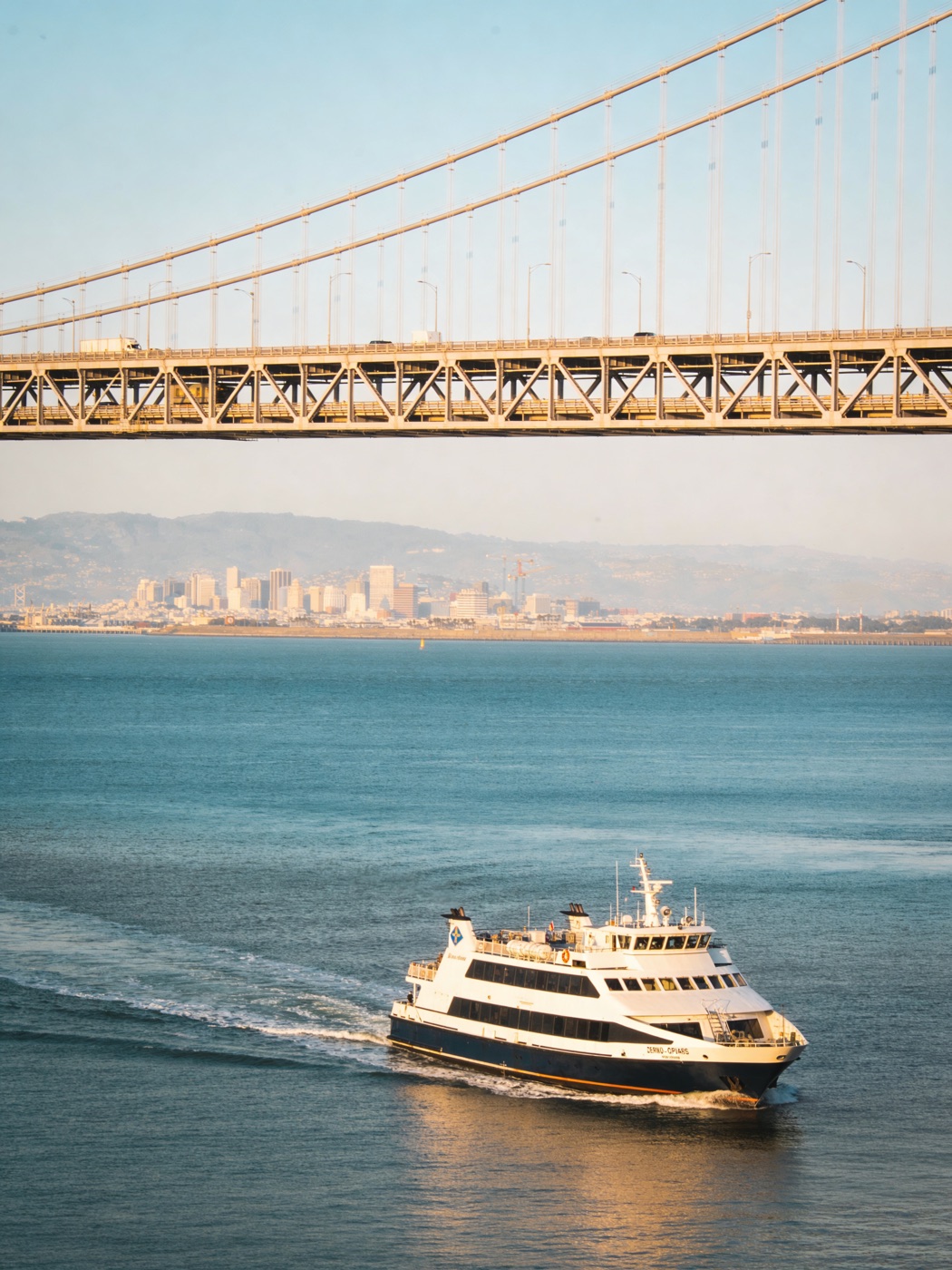
A commercial passenger ferry crossing San Francisco Bay beneath the Bay Bridge
!
AI Detection · 14 days early
“Bearing wear detected on gearbox #2.”
Not just “anomaly detected.” An answer the crew can act on.

The fleets we already keep observable

SF Bay Ferry
Largest Bay ferry operator
Blue & Gold Fleet
SF Bay passenger fleet
Amnav
Largest California tug operator
SF Bay Ferry
Largest Bay ferry operator
Blue & Gold Fleet
SF Bay passenger fleet
Amnav
Largest California tug operator
SF Bay Ferry
Largest Bay ferry operator
Blue & Gold Fleet
SF Bay passenger fleet
Amnav
Largest California tug operator
SF Bay Ferry
Largest Bay ferry operator
Blue & Gold Fleet
SF Bay passenger fleet
Amnav
Largest California tug operator
60%
Reduction in planned-maintenance time
across current live clients
Earlier failure warning
vs. CMMS-only or sensor-only baselines
<20 sec
Magnetic sensor install
no downtime to fit the fleet
Live
Paid pilots in San Francisco Bay
ferry & tug fleets, today
The Problem · CMMS is blind

Commercial ships are still mechanical black boxes.

Maritime is the last remaining legacy industrial system. Unlike cars or aircraft, ships run with zero real-time engine telemetry. Failures are caught after they happen — reactive, not predictive.

“The software says something is wrong, but doesn't tell me why.” — what operators told us.

$10–50K/day
Cost of a single engine failure on a workboat, in downtime.
~30%
Fragmented vendors with no unified procurement layer.
Paper
Logbooks, PDFs, and Excel are still the system of record aboard.
25–40 yr
Vessel lifespan — every fleet is a long-lived legacy stack.
Our Insight

The industry treats planned and predictive maintenance as separate systems. We fuse them.

Planned-maintenance data becomes the training data for prediction. Every repair makes the next forecast sharper — a data moat that compounds with every vessel.

Today
“Anomaly detected.”
  • — Operator investigates manually
  • — Inspects the entire system
  • — Potentially dry-docks early. Very expensive.
With Philyron
“Bearing wear detected on gearbox #2.”
  • — Detect the issue weeks earlier
  • — Order parts beforehand, schedule the work
  • — Repair only the affected subsystem
We're not eliminating maintenance. We're eliminating surprises.
Powered by Innovation

One stack, three ways to see your fleet.

Tools designed to simplify inspections, automate workflows, and turn live sensor data into actionable insight — from the deck to the shore.
Crew-side maintenance
‹ BackGEARBOX #2
AI Detection
Findings
PriorityHigh
LocationEngine room / Gearbox #2
Detected14 days before failure
SensorVIB-01 · vibration
The Platform

Hardware that ships. Software that compounds.

One stack — sensor, edge, CMMS, and AI — sold as a single product to fleet operators. Built for the deck, not the desk.
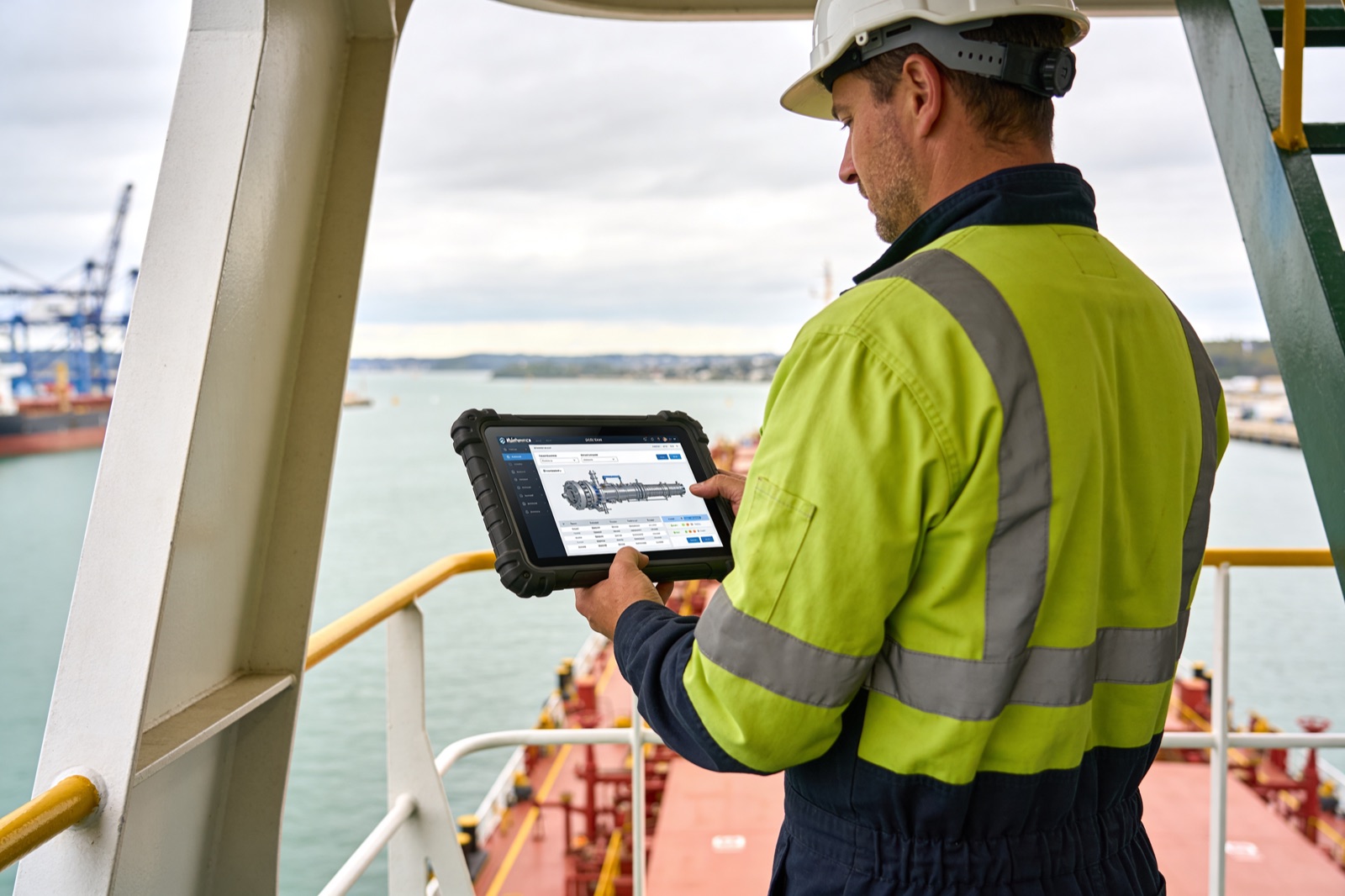
A maritime engineer reviewing a Philyron maintenance dashboard on a rugged tablet aboard a vessel
One integrated stack · sensor → edge → CMMS → AI
01
Sensors
Vibration & thermal, on the engine
02
Edge device
Onboard fusion · ship → shore
03
CMMS
Work orders, mobile, inventory
04
AI analytics
Failure precursors, weeks early
Why Us

Speed. Customer access. A better stack.

01

Speed

Built like an operator, not a vendor. Two products in five weeks. The team has shipped ship subsystems for Atlas Elektronik, TKMS, and NASA — they move maritime hardware through real fleets, fast.

5 wks · 2 SKUs · 1 paid pilot live
02

Access

Every door that matters is already open. Paying customers include SF Bay Ferry; ~$2.5M in LOIs with Amnav and Blue & Gold Fleet. Advisors include a 4-star Admiral and the former president of Lloyd's Register.

SF Bay Ferry · Amnav · Lloyd's · USN
03

Tech

CMMS and predictive — in one stack. Competitors sell either CMMS workflow or predictive analytics. We're the only stack fusing planned-maintenance data with our own sensor telemetry into one predictive model, trained on real, live fleets.

Sensor · Edge · CMMS · AI · one stack
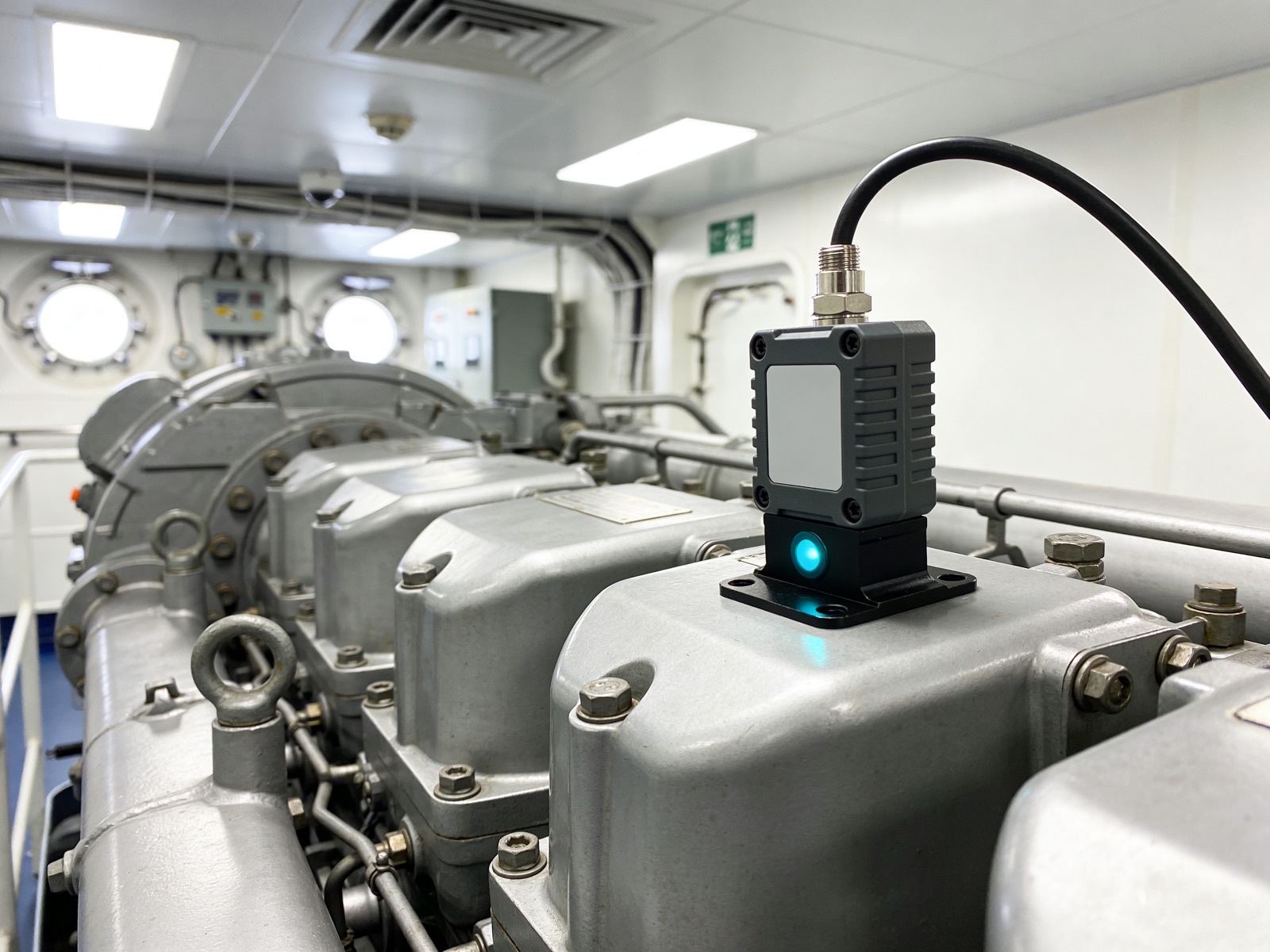
A Philyron vibration sensor mounted on a marine engine gearbox in the engine roomVibration sensor · live install
Why hardware is a moat

Most competitors start with software. We start where the data originates.

Anyone can build a dashboard. Very few have the sensors, the install, the maintenance records, and the operator workflows — all connected together.

Proprietary vibration data
Proprietary thermal data
Installation footprint on real hulls
Direct fleet relationships
Higher-quality labels for training
Market & Why Now

A generational market hiding in plain sight.

TAM
$14T
Global shipping economy

Moves 90% of world trade — the largest mobile industrial asset class on earth.

UNCTAD Review of Maritime Transport 2024
SAM
$92B
Annual fleet maintenance & MRO

Across 105,000+ commercial vessels worldwide — ~40,000 in the U.S. — every year, for the life of every hull.

Clarksons · UNCTAD · IMO 2024
SOM · BEACHHEAD
$4.5B
U.S. workboats & passenger fleets

Tugs, ferries, OSVs, and government fleets — the highest cost-per-day of downtime. Where we start.

USCG MISLE · World Bank · Internal model
Why now

Sensors, edge compute, and ML are finally cheap enough for fleet-wide deployment — and U.S. policy (the SHIPS Act and MARAD reform) is pushing to rebuild domestic maritime capacity for the first time in 50 years.

We'd like to show you the data.

Already shipping, already paid, already live in San Francisco Bay. Book 30 minutes and we'll walk you through the live fleet.

Philyron
Maritime Predictive Maintenance